
Introduction
Businesses in 2026 are moving faster than ever. Customers expect instant replies, personalized experiences, and seamless communication across every platform. As a result, companies are increasingly turning to AI assistants to improve operations, reduce costs, and boost customer satisfaction.
From automating lead generation to handling customer queries in seconds, AI assistants are reshaping how modern businesses operate. Today, these intelligent systems are no longer simple chatbots. They have evolved into advanced digital assistants capable of analyzing customer behavior, managing workflows, generating insights, and even assisting human teams in real time.
Major companies such as Microsoft, Salesforce, and OpenAI are investing heavily in AI-powered business solutions, accelerating the global adoption of AI assistants across industries.
As digital transformation continues, AI assistants are becoming essential tools in sales, marketing, and customer support strategies worldwide.
What Are AI Assistants?
AI assistants are software systems powered by artificial intelligence, machine learning, and natural language processing. These systems can understand conversations, analyze data, automate repetitive tasks, and provide intelligent responses.
Unlike traditional automation tools, modern AI assistants can:
- Learn from customer interactions
- Personalize communication
- Predict customer behavior
- Automate workflows
- Support decision-making
- Operate 24/7
In 2026, businesses are increasingly adopting “agentic AI,” where AI systems can independently perform tasks instead of simply responding to commands.
How AI Assistants Are Transforming Sales
Faster Lead Generation and Qualification
AI assistants are significantly improving lead generation processes. Instead of relying on manual research and follow-ups, businesses now use AI tools to identify high-potential leads instantly.
AI systems analyze:
- Customer behavior
- Website activity
- Social media engagement
- Purchase intent signals
- CRM data
This allows sales teams to focus on leads that are more likely to convert.
According to recent industry reports, AI-powered sales systems are helping companies reduce manual workloads while improving conversion rates and response times.
Real-Time Sales Assistance
Modern AI sales assistants can now support sales representatives during live customer calls.
For example, enterprise AI copilots can instantly retrieve product information, pricing details, and customer history during conversations, helping sales teams respond faster and more accurately.
This improves:
- Sales efficiency
- Customer confidence
- Deal closure speed
- Team productivity
AI Assistants in Marketing Automation
Hyper-Personalized Marketing Campaigns
One of the biggest advantages of AI assistants is personalization at scale.
AI tools can analyze customer preferences, browsing behavior, and engagement history to create highly personalized:
- Email campaigns
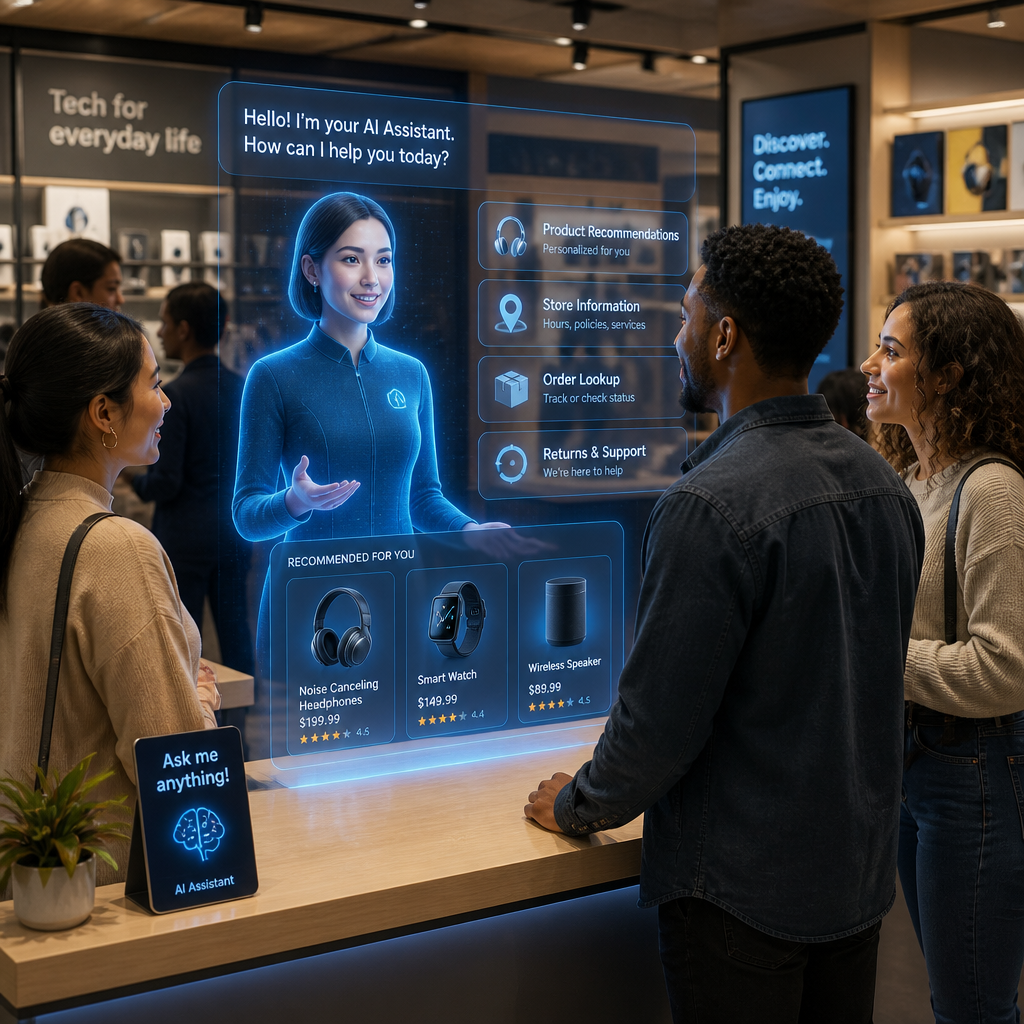
- Product recommendations
- Social media advertisements
- Website experiences
- Content suggestions
This allows businesses to deliver the right message to the right audience at the perfect time.
Marketing experts say AI is transforming digital marketing from a reactive process into a predictive strategy driven by data and customer intent.
AI-Powered Content Creation
AI assistants are also helping marketing teams produce content faster.
Businesses now use AI tools for:
- Blog writing
- Ad copy generation
- SEO optimization
- Video scripting
- Social media captions
- Customer engagement campaigns
While human creativity remains essential, AI dramatically reduces repetitive work and speeds up content production.
However, experts warn that businesses must balance automation with originality to avoid low-quality or repetitive AI-generated content.
Revolutionizing Customer Support With AI Assistants
24/7 Instant Customer Service
Customer support is experiencing one of the biggest AI transformations in 2026.
AI assistants can now:
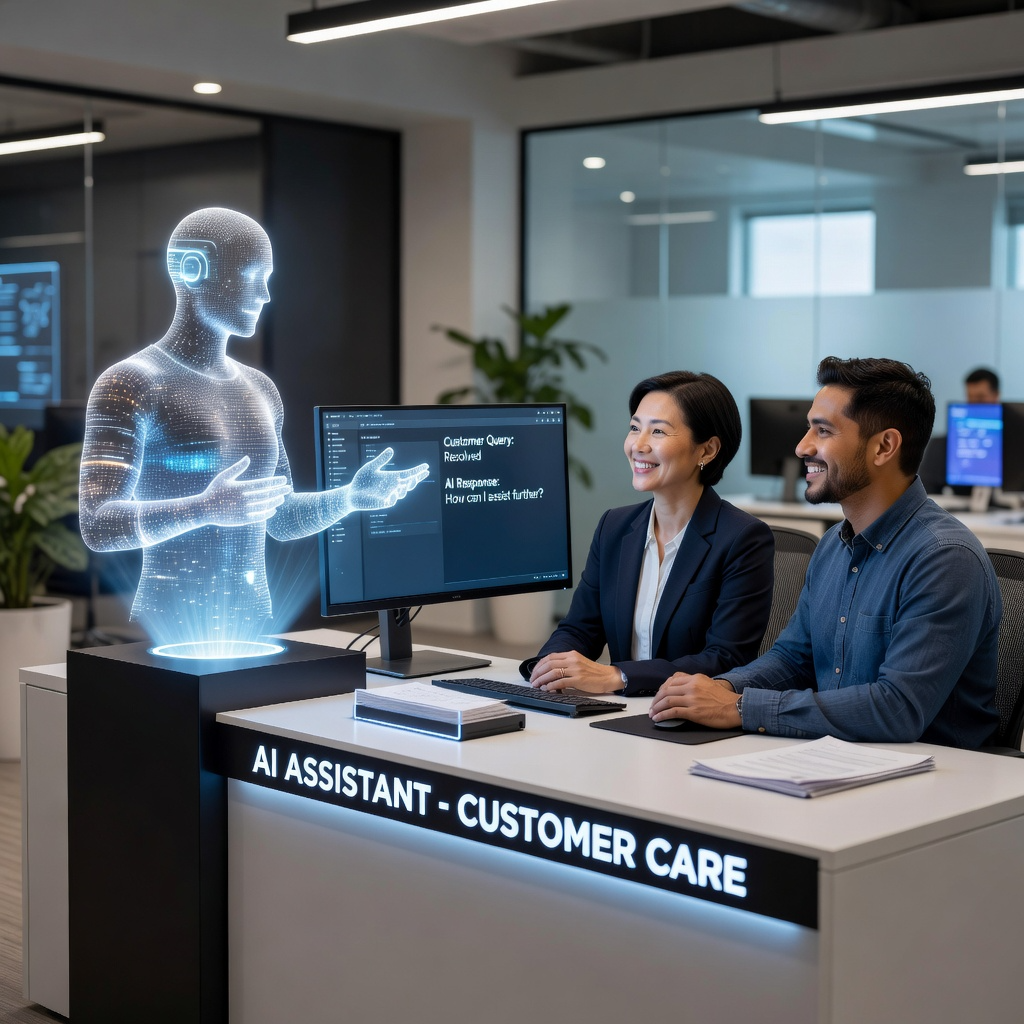
- Answer customer questions instantly
- Resolve tickets automatically
- Process refunds and returns
- Schedule appointments
- Track orders
- Escalate complex cases to humans
This reduces wait times and improves customer satisfaction.
Industry research suggests that AI will influence the majority of customer interactions in the coming years, helping businesses lower operational costs while improving service quality.
From Chatbots to Autonomous AI Agents
Traditional chatbots often struggled with complex conversations. However, modern AI assistants are becoming far more advanced.
Today’s AI agents can:
- Understand context
- Maintain conversation history
- Detect customer emotions
- Access multiple systems simultaneously
- Take actions without human intervention
For example, an AI support assistant can now process a complaint, verify customer data, issue replacements, and update internal systems automatically.
This shift is transforming customer support from reactive problem-solving into proactive customer experience management.
Benefits of AI Assistants for Businesses
Increased Productivity
AI assistants automate repetitive tasks, allowing employees to focus on strategic and creative work.
This improves operational efficiency across departments.
Lower Operational Costs
Businesses can reduce costs associated with:
- Manual support teams
- Data entry
- Lead qualification
- Campaign management
- Administrative tasks
AI-driven automation helps companies scale operations without significantly increasing workforce expenses.
Better Customer Engagement
AI assistants provide faster and more personalized communication, improving customer satisfaction and loyalty.
Customers increasingly expect instant support and tailored experiences across digital platforms.
Smarter Decision-Making
AI systems analyze massive amounts of data in real time, helping businesses make faster and more informed decisions.
This improves:
- Sales forecasting
- Marketing optimization
- Customer retention strategies
- Performance tracking
Challenges Businesses Still Face
Data Privacy and Security Risks
As businesses collect more customer data, protecting that information becomes increasingly important.
Companies must comply with privacy regulations and ensure AI systems handle sensitive data responsibly.
AI Hallucinations and Inaccurate Responses
Although AI assistants are improving rapidly, they can still generate incorrect or misleading responses.
Recent surveys show that some companies have reduced or adjusted AI deployments due to concerns about accuracy and governance.
This highlights the importance of human oversight and quality control.
Maintaining Human Connection
While AI can handle routine interactions effectively, many customers still prefer human support for emotional or complex situations.
Successful companies are adopting a hybrid approach where AI handles repetitive tasks while human teams focus on relationship-building and strategic communication.
The Future of AI Assistants in 2026 and Beyond
The future of AI assistants is becoming increasingly agent-driven.
Businesses are now moving toward connected AI ecosystems where assistants can:
- Coordinate across departments
- Automate entire workflows
- Predict customer needs
- Deliver proactive recommendations
- Integrate deeply with CRMs and enterprise systems
Experts believe AI assistants will soon become core business infrastructure rather than optional productivity tools.
At the same time, companies that prioritize trust, transparency, and responsible AI implementation are likely to gain the biggest competitive advantage.
Conclusion
The rise of AI assistants in sales, marketing, and customer support is transforming how businesses operate in 2026.
From intelligent lead generation to hyper-personalized marketing and autonomous customer service, AI assistants are helping companies improve efficiency, reduce costs, and deliver better customer experiences.
However, successful AI adoption requires more than automation alone. Businesses must balance technology with human creativity, ethical practices, and customer trust.
As AI continues evolving, organizations that embrace intelligent automation strategically will be better positioned to compete in the increasingly digital and customer-driven global economy.
https://www.24x7saraltech.com/contact-us/
book free consultation to setup your marketing and ai automations