The workplace is changing faster than ever before. In 2026, businesses are no longer using artificial intelligence only for basic automation. Instead, companies are now deploying “AI employees” that can manage workflows, analyze data, communicate with customers, and even assist in decision-making.
From customer support and finance to HR and supply chain management, AI employees are becoming a core part of modern business operations. Major companies like Google, Salesforce, and PwC are actively discussing how AI agents and intelligent automation are reshaping enterprise workflows in 2026.
As businesses look for faster, smarter, and more scalable ways to operate, AI employees are emerging as one of the most powerful technologies driving digital transformation.
What Are AI Employees?
AI employees are intelligent software systems designed to perform tasks traditionally handled by humans. Unlike traditional automation tools, these systems can learn, adapt, communicate, and make decisions with minimal supervision.
In 2026, AI employees are capable of:
- Handling customer conversations
- Managing schedules and workflows
- Processing invoices and reports
- Analyzing operational data
- Generating business insights
- Supporting HR and recruitment
- Monitoring cybersecurity risks
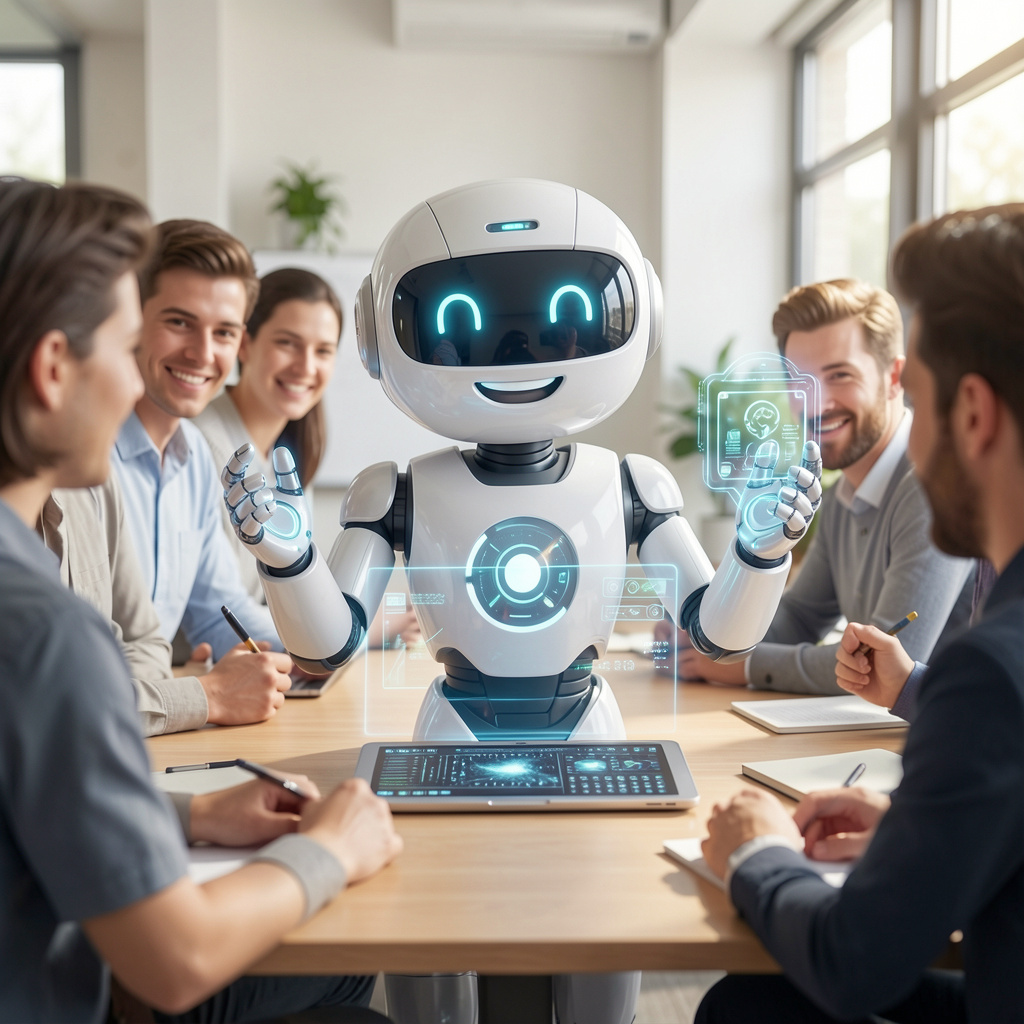
Many organizations now use AI agents that work alongside human teams rather than simply replacing repetitive tasks. According to recent reports, businesses are increasingly moving toward “agentic workflows,” where multiple AI systems collaborate across departments to complete complex processes.
Why AI Employees Are Growing Rapidly in 2026
Increased Demand for Operational Efficiency
Businesses are under pressure to improve productivity while reducing operational costs. AI employees can work 24/7, process massive amounts of information instantly, and complete repetitive tasks without fatigue.
According to reports on enterprise AI adoption, organizations using AI-driven automation are seeing major improvements in speed, workflow management, and operational efficiency.
Advances in Generative AI and AI Agents
The rise of generative AI and autonomous AI agents has accelerated the adoption of AI employees.
Unlike older automation systems, modern AI tools can:
- Understand natural language
- Learn from previous interactions
- Make context-aware decisions
- Coordinate tasks across platforms
Google Cloud recently highlighted that AI agents are expected to fundamentally reshape the way businesses work in 2026 by automating complex multi-step processes.
How AI Employees Are Transforming Business Operations
AI-Powered Customer Support
One of the biggest areas of transformation is customer service.
AI employees can now:
- Respond to customer inquiries instantly
- Handle routine support requests
- Route complex cases to human agents
- Personalize customer interactions
- Provide multilingual support
Many businesses report that AI systems can resolve a large percentage of first-level support queries automatically, improving both response speed and customer satisfaction.
As a result, human employees can focus on higher-value interactions and problem-solving.
Smarter Decision-Making Through Real-Time Data
AI employees are also helping companies make faster and more accurate business decisions.
Modern AI systems analyze:
- Sales trends
- Customer behavior
- Operational performance
- Inventory levels
- Financial risks
These insights allow businesses to respond quickly to market changes and improve strategic planning.
According to Deloitte, companies are increasingly shifting from small AI experiments to enterprise-wide AI implementation focused on measurable business impact.
AI in Human Resources and Recruitment
Recruitment and employee management are becoming more automated in 2026.
AI employees can now:
- Screen resumes
- Schedule interviews
- Track employee performance
- Automate onboarding
- Support workforce planning
Some organizations are using “AI recruiting assistants” that reduce administrative work and allow HR teams to focus more on employee engagement and strategy.
This improves hiring speed while also enhancing operational efficiency.
Supply Chain and Operations Optimization
Supply chain management is another area experiencing rapid AI transformation.
AI employees help businesses:
- Predict inventory shortages
- Monitor logistics operations
- Detect operational inefficiencies
- Improve warehouse management
- Forecast customer demand
According to operations experts, AI-driven infrastructure and predictive maintenance are becoming essential for modern enterprise operations in 2026.
This reduces downtime and improves overall productivity.
Financial Operations and Risk Management
Finance departments are increasingly relying on AI employees for:
- Invoice processing
- Fraud detection
- Financial forecasting
- Budget analysis
- Compliance monitoring
AI can analyze financial data much faster than manual teams, helping businesses reduce errors and improve decision-making.
Financial institutions especially benefit from real-time AI monitoring systems that can identify suspicious transactions and operational risks immediately.
The Rise of Hybrid Workforces
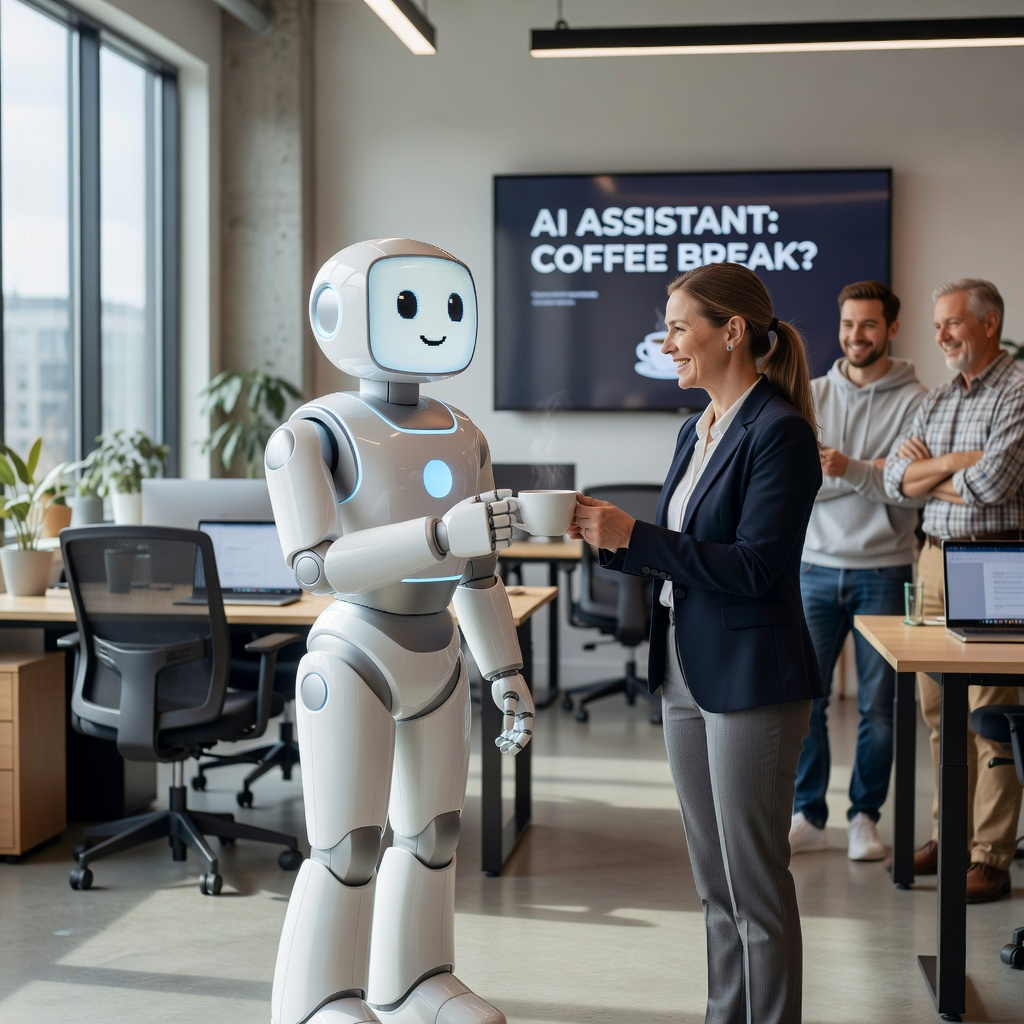
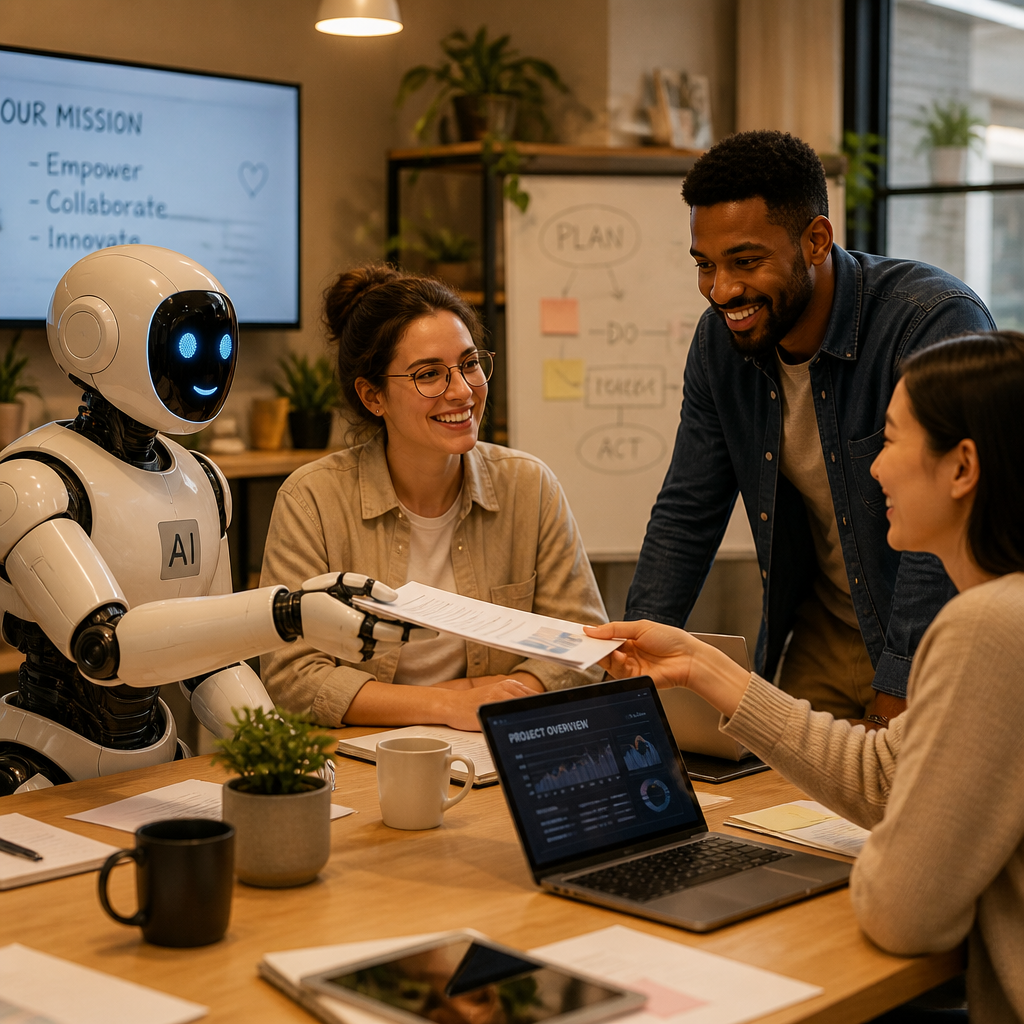
Rather than fully replacing humans, most businesses are building hybrid workforces where humans and AI employees collaborate together.
In these environments:
- AI handles repetitive operational tasks
- Humans focus on creativity and strategy
- Teams make decisions faster
- Productivity increases significantly
Salesforce recently stated that organizations are redesigning job roles around AI-driven workflows while investing heavily in employee reskilling.
This signals a major shift in how companies structure their workforce.
Key Benefits of AI Employees in Business
1.Faster Operations
AI employees help businesses complete routine and time-consuming tasks much faster than traditional manual processes. From responding to customer inquiries and processing invoices to analysing data and generating reports, AI systems can perform tasks instantly with minimal delays. This improves workflow efficiency, speeds up communication between departments, and allows businesses to make faster decisions. By reducing turnaround time, organisations can improve customer satisfaction and overall productivity.
2.Lower Operational Costs
One of the biggest advantages of AI employees is cost efficiency. Businesses can automate repetitive and administrative tasks that would otherwise require large teams and additional resources. This helps companies reduce expenses related to manual labour, training, overtime, and operational inefficiencies. AI-powered systems can also optimise resource management, helping businesses allocate budgets more effectively while maintaining high levels of performance and service quality.
3.Improved Accuracy
AI systems are designed to process large amounts of data with high precision, significantly reducing the risk of human error. In areas such as financial reporting, inventory management, customer data handling, and analytics, AI can improve consistency and reliability. Accurate data processing helps businesses make better strategic decisions, maintain compliance, and avoid costly mistakes that may occur due to manual operations.
4.Better Scalability
AI employees make it easier for businesses to scale operations as demand grows. Unlike traditional workforce expansion, which often requires hiring, onboarding, and infrastructure investment, AI systems can handle increasing workloads with minimal additional cost. This flexibility allows businesses to expand customer support, sales operations, data analysis, and digital services more efficiently while maintaining operational stability and performance.
5.24/7 Productivity
Unlike human teams, AI systems can operate continuously without breaks, holidays, or downtime. This allows businesses to provide round-the-clock customer support, monitor systems in real time, process transactions overnight, and maintain uninterrupted operations across global markets. Continuous productivity helps improve response times, increase service availability, and support businesses operating in multiple time zones
Challenges Businesses Must Address
Data Privacy and Security
AI employees often process sensitive company and customer information. Businesses must implement strong cybersecurity and compliance systems to protect data.
AI Bias and Ethical Concerns
Poor-quality data can cause AI systems to produce biased or inaccurate decisions.
Organizations must ensure transparency, fairness, and responsible AI governance.
Workforce Adaptation and Reskilling
As AI employees become more common, businesses need to train employees for new roles focused on strategy, creativity, and AI management.
Experts increasingly emphasize that AI adoption should focus on augmentation rather than simple workforce replacement.
The Future of AI Employees Beyond 2026
The future of AI employees is expected to move beyond task automation into autonomous business management.
Experts predict future AI systems may:
- Coordinate entire workflows independently
- Make operational decisions automatically
- Manage digital business ecosystems
- Collaborate across departments autonomously
This evolution could fundamentally reshape how organizations operate globally.
Research papers on AI-driven business transformation also suggest that AI may create entirely new business models and operational structures in the coming years.
Conclusion
AI employees are rapidly transforming the future of business operations in 2026. From customer support and HR to finance and supply chain management, intelligent automation is helping businesses become faster, smarter, and more efficient.
Companies that successfully integrate AI employees into their workflows are gaining major advantages in productivity, scalability, and decision-making. At the same time, organizations must address challenges related to ethics, data privacy, and workforce adaptation.
As artificial intelligence continues evolving, businesses are moving toward a future where humans and AI employees work together to create more agile, innovative, and future-ready enterprises.
https://www.24x7saraltech.com/contact-us/
book free consultation to setup your marketing and ai automations