
Introduction
The workplace is evolving faster than ever, and AI in Human Resources is becoming a key driver of that transformation. In 2026, organizations are using artificial intelligence to streamline recruitment, improve employee experiences, reduce hiring costs, and make data-driven workforce decisions.
As competition for skilled talent continues to increase, companies are turning to AI-powered solutions to identify the best candidates, automate repetitive HR tasks, and create more personalized employee journeys. From resume screening to workforce planning, AI is reshaping how businesses attract, hire, and retain top talent.
According to industry leaders such as LinkedIn and Microsoft, AI-driven workplace tools are becoming essential for modern organizations seeking efficiency and growth.
Why AI in Human Resources Is Growing Rapidly
Human resource teams face increasing pressure to hire faster, improve employee satisfaction, and manage larger volumes of workforce data. AI helps solve these challenges by automating routine tasks and delivering actionable insights.
Key factors driving AI adoption include:
- Talent shortages across industries
- Rising recruitment costs
- Demand for personalized employee experiences
- Growth of remote and hybrid work
- Need for faster decision-making
As a result, AI is becoming a strategic partner rather than just a technology tool.
AI-Powered Recruitment Is Revolutionizing Hiring
Faster Candidate Screening
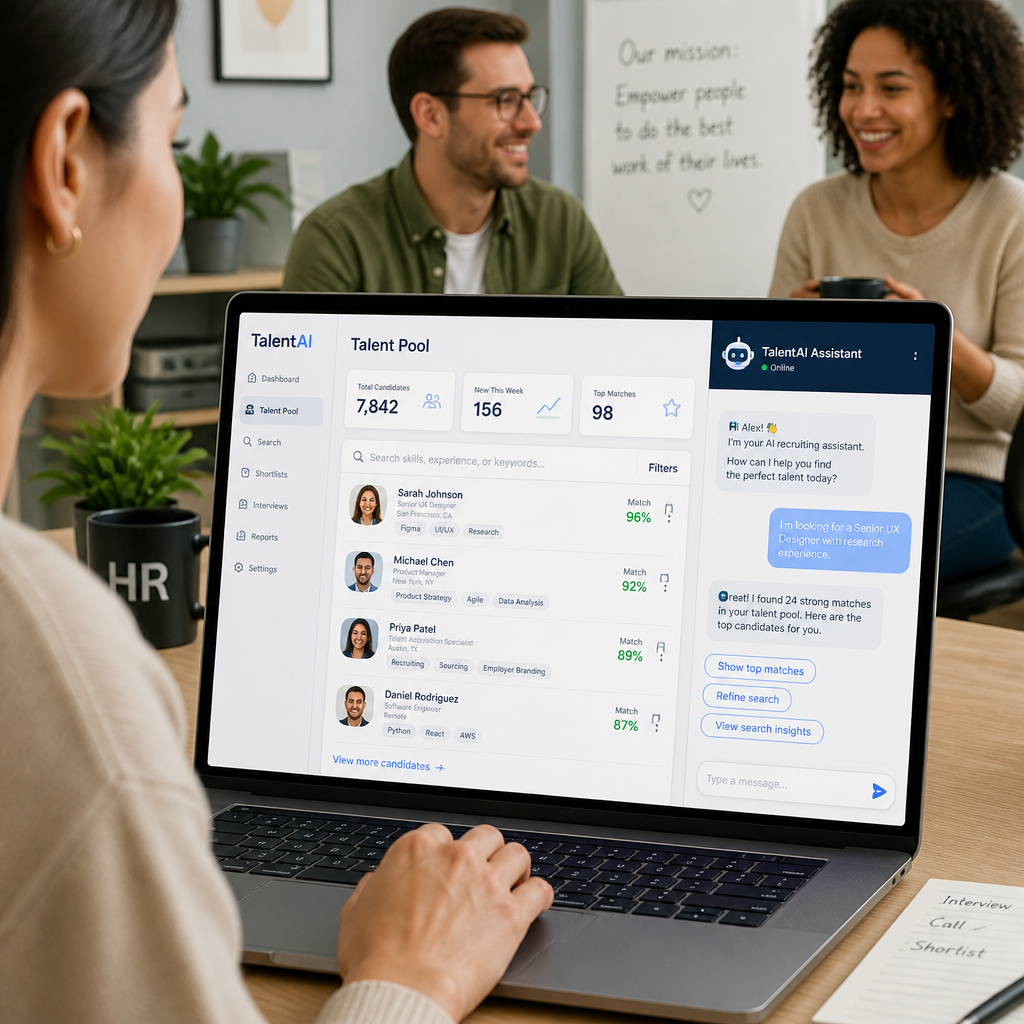
Recruiters often spend hours reviewing resumes. AI-powered recruitment systems can analyze thousands of applications within minutes and identify candidates that best match job requirements.
Benefits include:
- Reduced screening time
- Better candidate matching
- Faster hiring decisions
- Improved recruiter productivity
This allows HR professionals to focus on interviewing and relationship-building rather than administrative work.
Intelligent Candidate Sourcing
AI tools can search professional networks, talent databases, and online platforms to identify qualified candidates who may not actively be looking for new opportunities.
This proactive approach helps businesses:
- Reach passive candidates
- Expand talent pools
- Fill specialized roles more efficiently

Enhancing the Candidate Experience
AI Chatbots for Recruitment
Modern recruitment chatbots provide instant responses to candidate questions, schedule interviews, and offer application updates around the clock.
Advantages include:
- 24/7 candidate support
- Faster communication
- Reduced response delays
- Improved employer branding
Candidates appreciate quick and transparent communication throughout the hiring process.
Personalized Hiring Journeys
AI analyzes candidate behavior and preferences to deliver personalized job recommendations and communications.
This creates a more engaging recruitment experience and increases application completion rates.
AI Is Improving Employee Onboarding
The first few weeks of employment are critical for long-term success. AI-powered onboarding platforms help new hires quickly adapt to company culture and workflows.
Automated Onboarding Processes
AI can automate:
- Document collection
- Compliance verification
- Training assignments
- Orientation scheduling
This reduces paperwork and allows employees to become productive more quickly.
Personalized Learning Paths
AI systems assess employee roles, skills, and goals to recommend customized training programs that support professional development.
Workforce Analytics and Smarter Decision-Making
One of the biggest advantages of AI in Human Resources is the ability to transform workforce data into actionable insights.
Predictive Hiring Analytics
AI helps HR teams forecast:
- Future hiring needs
- Talent shortages
- Workforce growth trends
- Skills gaps
This allows organizations to plan ahead and build stronger talent pipelines.
Employee Performance Insights
AI-powered analytics identify performance patterns and help managers understand what drives productivity and engagement.
Businesses can then make more informed decisions regarding promotions, training, and workforce development.
AI-Powered Employee Engagement and Retention
Retaining skilled employees is just as important as hiring them.
Measuring Employee Sentiment
AI tools can analyze surveys, feedback forms, and communication trends to understand employee satisfaction levels.
Benefits include:
- Early identification of workplace concerns
- Improved employee wellbeing
- Better management decisions
- Higher retention rates
Predicting Employee Turnover
Advanced AI systems can identify indicators that suggest an employee may be considering leaving the organization.
This allows HR teams to take proactive steps to improve engagement and reduce turnover.
The Role of AI in Diversity and Inclusion
Many organizations are using AI to support fairer hiring practices.
Reducing Unconscious Bias
When designed responsibly, AI can focus on skills, qualifications, and experience rather than demographic factors.
This helps organizations:
- Promote equal opportunities
- Improve workforce diversity
- Expand access to talent
However, companies must continuously monitor AI systems to ensure fairness and avoid algorithmic bias.
Challenges of AI in Human Resources
While AI offers significant advantages, organizations must address several challenges.
Data Privacy and Compliance
HR departments manage highly sensitive employee information. Businesses must comply with privacy regulations and maintain strong cybersecurity practices.
AI Bias Risks
Poor-quality training data can result in biased hiring recommendations or inaccurate workforce insights.
Regular audits and human oversight remain essential.
Maintaining Human Connection
Despite automation, employees still value personal interactions, empathy, and human judgment.
The most successful organizations combine AI efficiency with meaningful human engagement.
Future Trends for AI in Human Resources
Several emerging trends are expected to shape HR in the coming years:
AI-Powered Career Development
Employees will receive personalized career guidance based on their skills, goals, and performance data.
Virtual HR Assistants
AI assistants will help employees access information, request support, and manage workplace tasks instantly.
Skills-Based Workforce Planning
Organizations will increasingly prioritize skills over traditional job titles, with AI helping identify internal talent opportunities.
Continuous Workforce Intelligence
Real-time analytics will provide leaders with ongoing insights into workforce performance, engagement, and future needs.
Benefits of AI in Human Resources
Faster Hiring Processes
AI accelerates candidate sourcing, screening, and interview scheduling.
Lower Recruitment Costs
Automation reduces administrative workloads and operational expenses.
Better Hiring Decisions
Data-driven insights improve candidate selection and workforce planning.
Enhanced Employee Experience
Personalized onboarding, learning, and support increase engagement.
Scalable HR Operations
Organizations can manage larger workforces efficiently without significantly increasing HR staff.
Conclusion
AI in Human Resources is transforming how organizations attract, hire, develop, and retain talent in 2026. By automating repetitive tasks, enhancing decision-making, and delivering personalized employee experiences, AI is helping HR teams become more strategic and effective.
While challenges such as data privacy, bias management, and maintaining human interaction remain important, the benefits of AI-driven HR are undeniable. Companies that successfully combine artificial intelligence with human expertise will be better positioned to build stronger teams, improve employee satisfaction, and thrive in an increasingly competitive business environment.
As AI technology continues to evolve, the future of human resources will be defined not by replacing people, but by empowering them to work smarter, make better decisions, and create more meaningful workplace experiences.
https://www.24x7saraltech.com/contact-us/
book free consultation to setup your marketing and ai automations